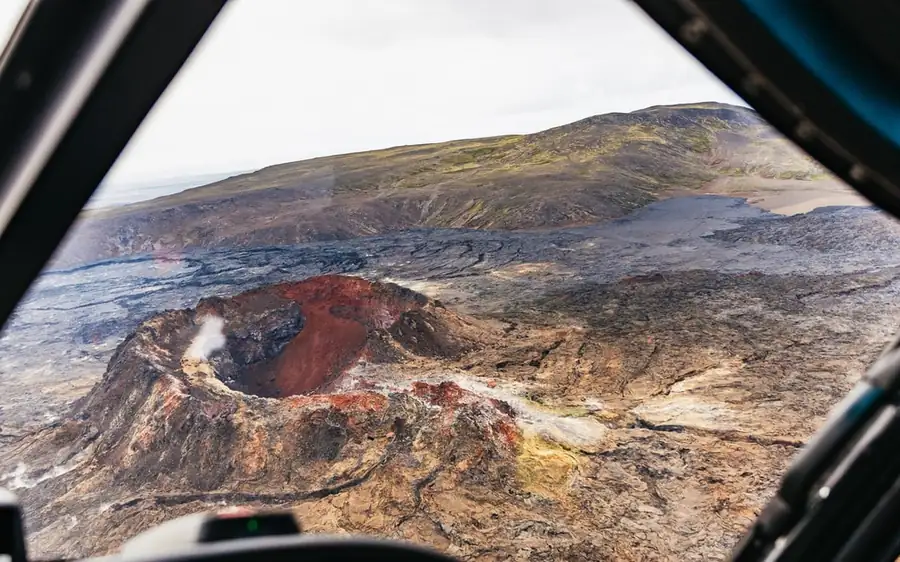
 40 min
New Volcanic Area
★ 4.8 · 569 reviews
- 40 minutes, this new volcanic area
- Helicopter flight from Reykjavik
- Cheapest here
- Free cancellation
$528
Check availability→ The main reason people fly here
Three of the six tours out of Reykjavik go to the volcanic ground on the Reykjanes Peninsula. Here is what is actually down there, which flight covers it best, and the one promise no operator will make.
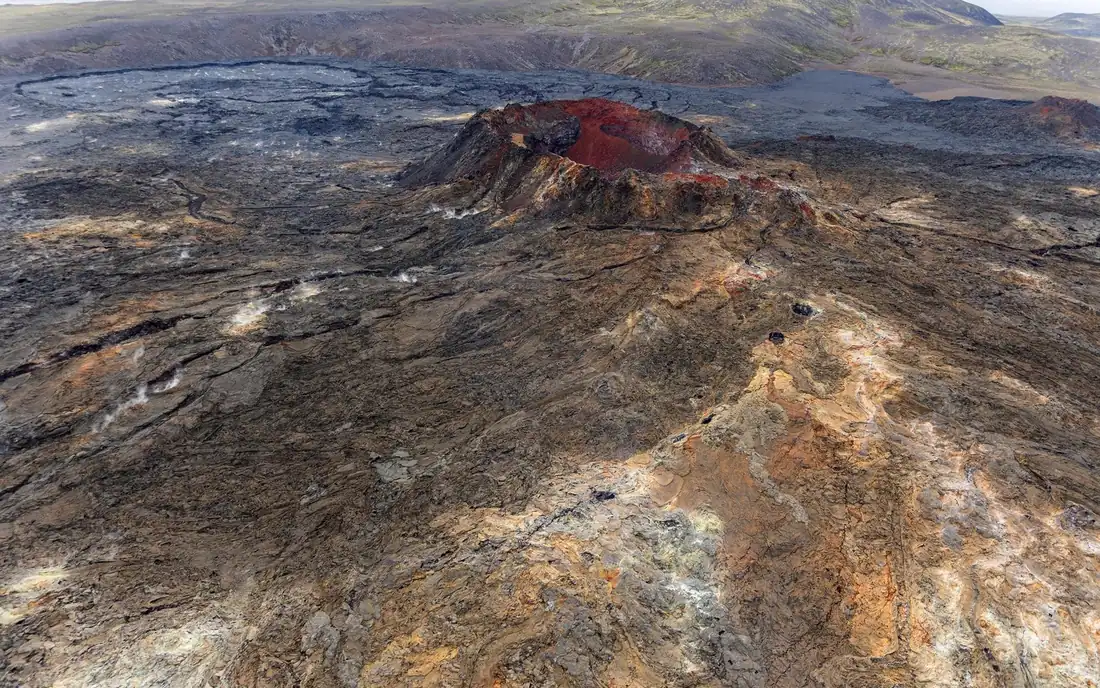
Yes, and for a reason that has nothing to do with seeing lava. The Reykjanes Peninsula is a landscape made almost entirely of lava flows of different ages, and from the ground they all look like the same black rubble. From a thousand feet they separate into distinct rivers — you can see which vent each one came from, which direction it ran, what it flowed around and exactly where it stopped. That reading of the ground is the product. A Reykjavik volcano helicopter tour starts at $528 for forty minutes.
What you see
Reykjanes had been quiet for about eight hundred years when it woke up in March 2021. Since then the peninsula has produced a series of fissure eruptions — Geldingadalir in 2021, Meradalir in 2022, Litli-Hrutur in 2023 and further activity closer to Grindavik after that. Each one left new ground behind, and that new ground is what the flights are built around.
The Fagradalsfjall system is the centrepiece. It is a group of hills with a bowl in the middle, and the cones that fed the eruptions sit in it with hardened lava running away downhill in wide, folded sheets. There is no road to it. The hiking trails that exist take two to three hours on the round trip and are closed whenever the authorities judge the gas or the ground to be unsafe.
Around it, the older fields spread out to the coast — grey-green with moss where the lava is centuries old, raw black where it is not. On the southern side you pass the Blue Lagoon, which sits in that same lava, and the geothermal plant beside it. On a clear day the whole peninsula reads as one system rather than a series of car parks, and that is the thing you cannot buy on the ground at any price.
Straight talk
This needs saying plainly because a lot of pages about these tours avoid it. There may be no eruption happening on the day you fly. The operator’s own listing says so: eruptions are a natural occurrence that may or may not be active during your visit, and there is no guarantee of visible lava.
Book the flight for the ground, not the glow. The craters, the flow fields, the collapsed lava tubes and the line where the rock stopped moving are all there every day of the year, and they are remarkable on a grey Tuesday in November. If something is erupting while you are in Iceland, you will know about it before you book, and the flights will be harder to get.
The corollary is worth knowing too: during an active eruption, aviation restrictions can close the airspace around the site entirely. An active volcano does not guarantee you a closer look. It sometimes guarantees the opposite.
Every tour, current fare
These are the tours that put you over the Reykjanes volcanic ground. The other three go to the highlands, the glacier or the geothermal field.
Swipe sideways →
| Tour | Price | Door to door | Landings | Per minute | Rating |
|---|---|---|---|---|---|
| Fagradalsfjall Eruption | $554 | 35 min | None | $15.83 | 5.0 · 5 |
| New Volcanic Area | $528 | 40 min | None | $13.20 | 4.8 · 569 |
| Fire and Ice, 2 Landings | $910 | 2 h | Two | $7.58 | 4.8 · 155 |
Timing
If the craters are the whole point: the forty-minute New Volcanic Area tour at $528. It is the cheapest way into the air here, it spends its whole flight over Reykjanes, and it is the most reviewed tour on this site by a wide margin. It does not land, which is the correct decision for this particular landscape — there is nowhere on a raw lava field that you want to stand for ten minutes.
If you are short on time: the thirty-five-minute eruption-site flight at $554 goes out, circles and comes back. It has very few reviews so far, which is a small-sample caution rather than a warning, and it is rated 5.0 by the people who have flown it.
If you only fly once in Iceland: Fire and Ice at $910. It crosses the volcanic area on the way out and then lands twice — once on a glacier and once on the Hengill geothermal field. You get the craters plus two things the shorter flights cannot give you at all.
Book direct
All three cover the Reykjanes volcanic area. Prices are per person and cancel free up to 24 hours before.
40 min★ 4.8 · 569 reviews
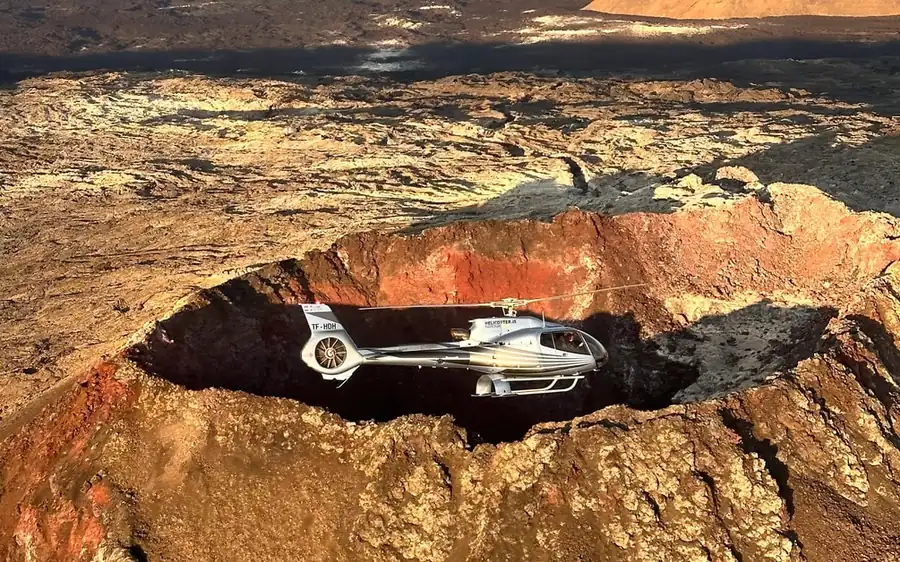 35 min
★ 5.0 · 5 reviews
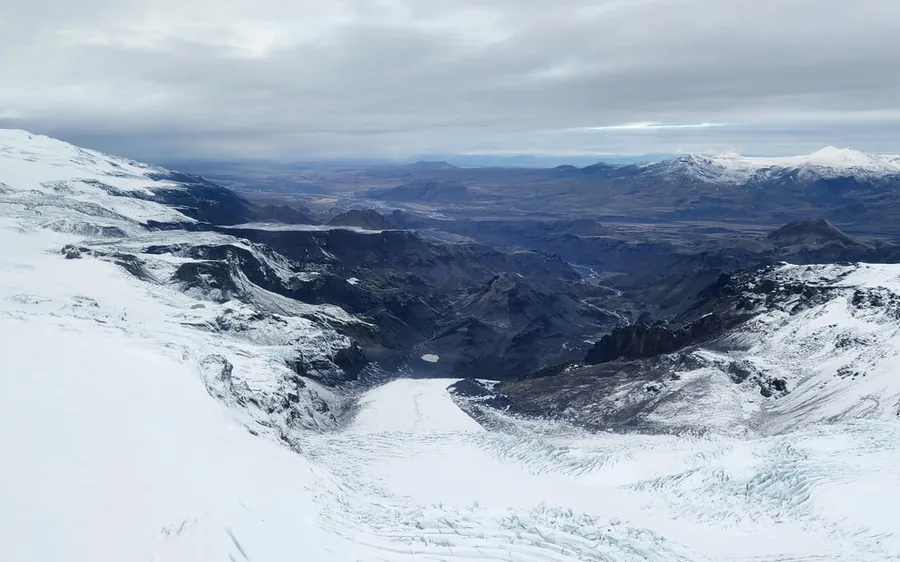 2 h
2 h★ 4.8 · 155 reviews
Side by side
The hike is free and it is genuinely good. Marked trails run to the Fagradalsfjall craters from car parks on the Sudurstrandarvegur road, the round trip is roughly seven to nine kilometres, and standing on the edge of a crater gives you a sense of texture and scale that no flight does.
What it cannot do is show you the system. On foot you see one crater and the lava immediately around it. From the air you see the whole peninsula at once: the sequence of vents, the direction each flow ran, the older fields underneath. People who do both usually say the flight explained what they had walked across.
The practical differences matter too. The trails close — for gas, for weather, for ground stability — and they close at short notice. The walk takes most of a day once you have driven out and back. And Icelandic weather on an exposed lava field in October is its own argument.
What it costs
Common questions
Not necessarily. Eruptions on the Reykjanes Peninsula start and stop on their own schedule and the operator states in the listing that visible lava cannot be guaranteed. Every flight does show the craters, the flow fields and the ground the recent eruptions left behind, which is there year-round.
The forty-minute New Volcanic Area flight is $528 and does not land. The thirty-five-minute eruption-site flight is $554. The two-hour Fire and Ice tour, which covers the volcanic area and then lands on a glacier and a geothermal field, is $910.
Roughly twelve to fifteen minutes of flying. The Reykjanes Peninsula begins almost at the edge of Reykjavik, which is why a forty-minute tour can spend most of its time over the lava rather than travelling to it.
Not on the lava field itself. The tours that land put down on a glacier, on the Hengill geothermal ridge or on a mountain summit. The volcanic-area flights are flyovers, which suits the terrain — a raw lava field is not somewhere you want to spend ten minutes on foot.
They show you different things. The hike gives you texture and scale at one crater and costs nothing. The flight shows the whole peninsula as one system — which vent fed which flow, and where each one stopped. Hiking trails also close at short notice for gas, weather or ground conditions.
Sometimes the opposite. During an active eruption, aviation restrictions can close the airspace around the site, so flights may be kept further away or stood down entirely. The ground left by past eruptions is visible every day of the year.
Go deeper
New Volcanic Area Tour
★ 4.8 · 569 reviews · Free cancellation 24 h