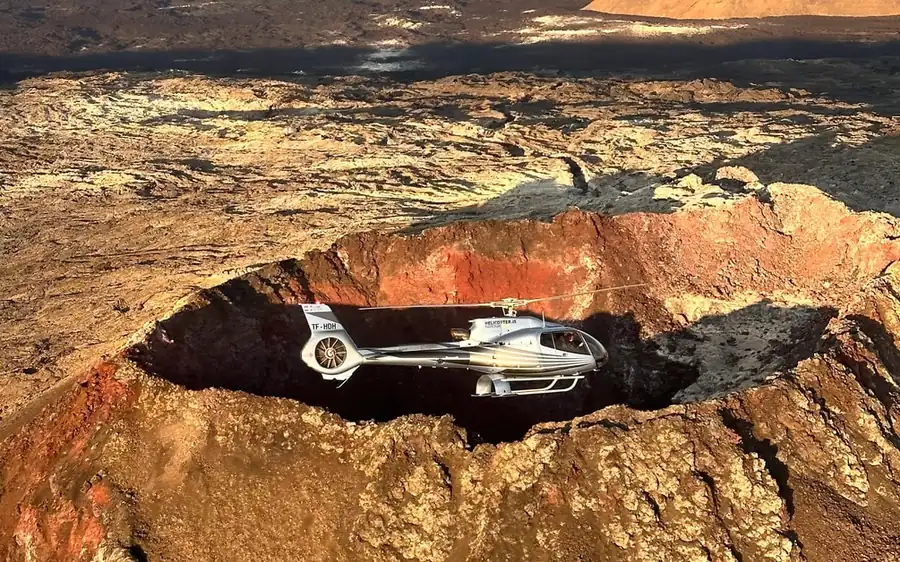
 35 min
Fagradalsfjall Eruption
★ 5.0 · 5 reviews
- 35 minutes
- Mobile voucher accepted
- Instant confirmation
- Free cancellation
$554
Check availability→ The eruption site
Fagradalsfjall produced the eruptions that brought Reykjanes back to life in 2021. There is no road to it and the walk takes most of a day. Here is what the craters look like from the air, which flights go there, and what the ground actually shows you now.
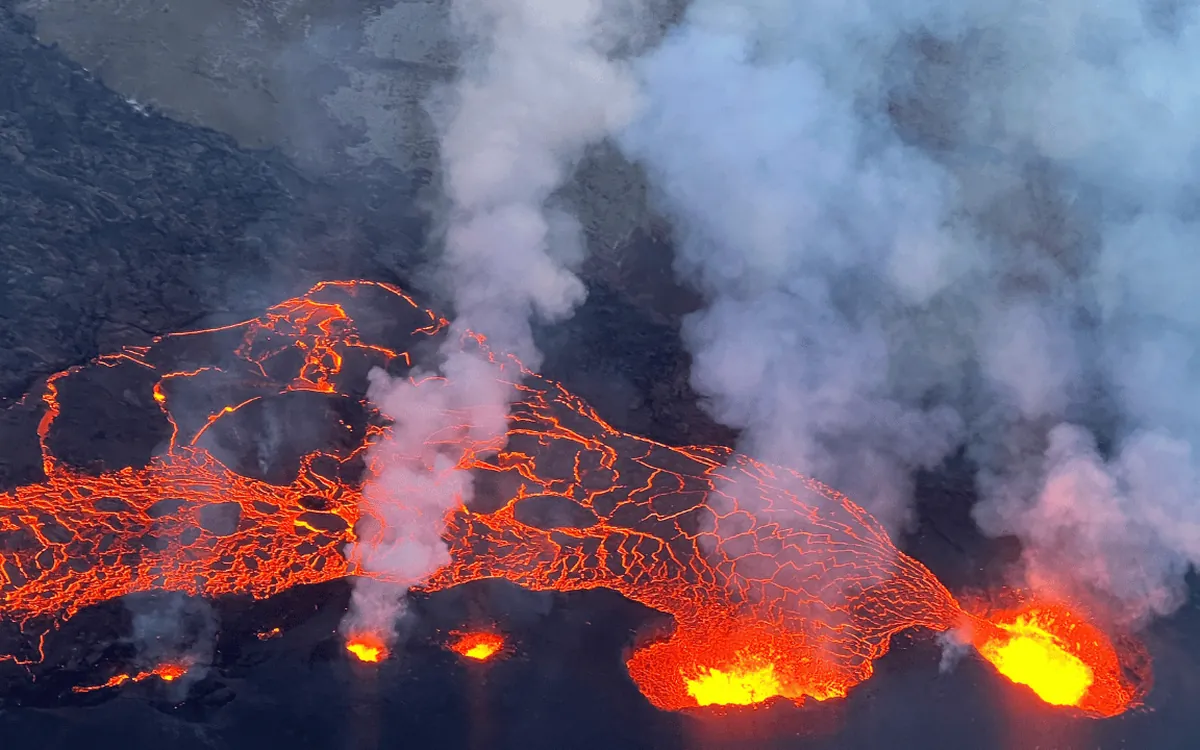
Yes. Three tours from Reykjavik cross the Fagradalsfjall crater system: the thirty-five-minute eruption-site flight at $554, the forty-minute New Volcanic Area tour at $528, and the two-hour Fire and Ice tour at $910, which passes over it on the way to its landings. None of them lands at the craters — the ground is unstable — and none can promise visible lava.
What you see
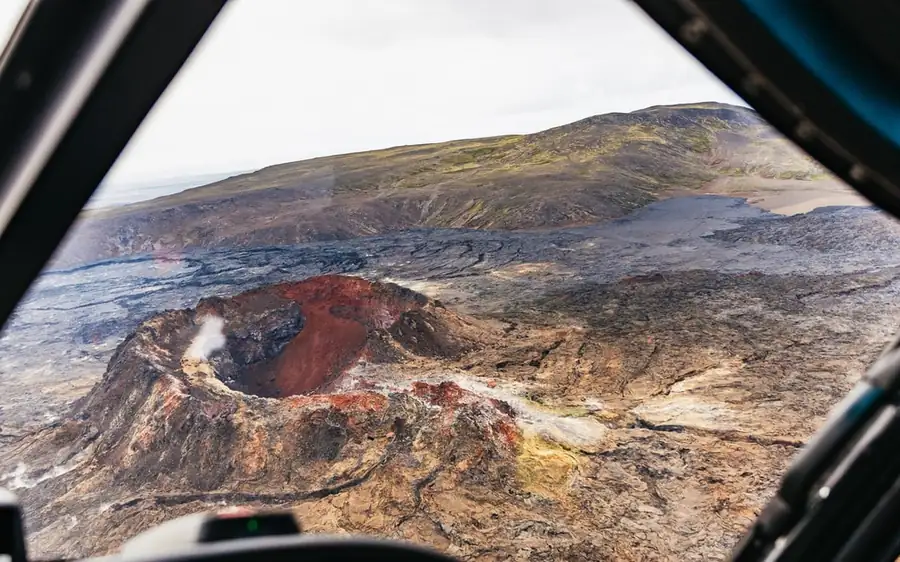
The eruptions stopped; the ground they built did not go anywhere. What you fly over is a bowl in the hills with a line of cones in the middle of it and lava spread out downhill in wide folded sheets. The most recent flows are raw black and completely bare. The older ones around them have started to take moss, which turns them a grey-green that photographs quite differently.
From the air you can trace the sequence: which vent opened first, which direction each flow ran, where one poured over another, and the clean line at the far edge where the rock simply stopped. That sequence is the thing that is genuinely hard to see on foot, because on the ground you are inside one flow at a time.
In places the surface has collapsed into lava tubes, which read from above as dark channels running through the field. On a cold day you may see steam where water is still finding hot rock. That is not lava, and no honest page should describe it as such.
Every tour, current fare
Three tours cross the crater system. None lands there.
Swipe sideways →
| Tour | Price | Door to door | Landings | Per minute | Rating |
|---|---|---|---|---|---|
| Fagradalsfjall Eruption | $554 | 35 min | None | $15.83 | 5.0 · 5 |
| New Volcanic Area | $528 | 40 min | None | $13.20 | 4.8 · 569 |
| Fire and Ice, 2 Landings | $910 | 2 h | Two | $7.58 | 4.8 · 155 |
Side by side
The walk is free and it is a real experience. Marked trails run from the car parks on Sudurstrandarvegur, the round trip is roughly seven to nine kilometres, and standing at a crater rim gives you a sense of texture that no flight can. It also takes three to five hours plus the drive, and the trails close — for volcanic gas, for weather, for ground stability — often at short notice.
The flight gives you the opposite: no texture, all structure. Thirty-five to forty minutes, no walking, and the whole system laid out at once. People who do both tend to say the flight explained what they had walked across.
One thing the flight does not do is get you closer during an active eruption. Aviation restrictions around an erupting fissure can push aircraft further away or ground them entirely, so an active volcano is not a guarantee of a better flight.
Book direct
All three cross the crater system. Prices are per person and cancel free up to 24 hours before.
35 min★ 5.0 · 5 reviews
 40 min
★ 4.8 · 569 reviews
 2 h
2 h★ 4.8 · 155 reviews
Common questions
Yes. Three tours from Reykjavik cross the crater system: the thirty-five-minute eruption-site flight at $554, the forty-minute New Volcanic Area tour at $528, and the two-hour Fire and Ice tour at $910, which passes over it on the way to its landings.
Eruptions on the Reykjanes Peninsula start and stop on their own schedule, and no operator can promise visible lava on the day you fly. What is there every day is the ground the 2021 to 2023 eruptions built: the cones, the flow fields and the line where the lava stopped.
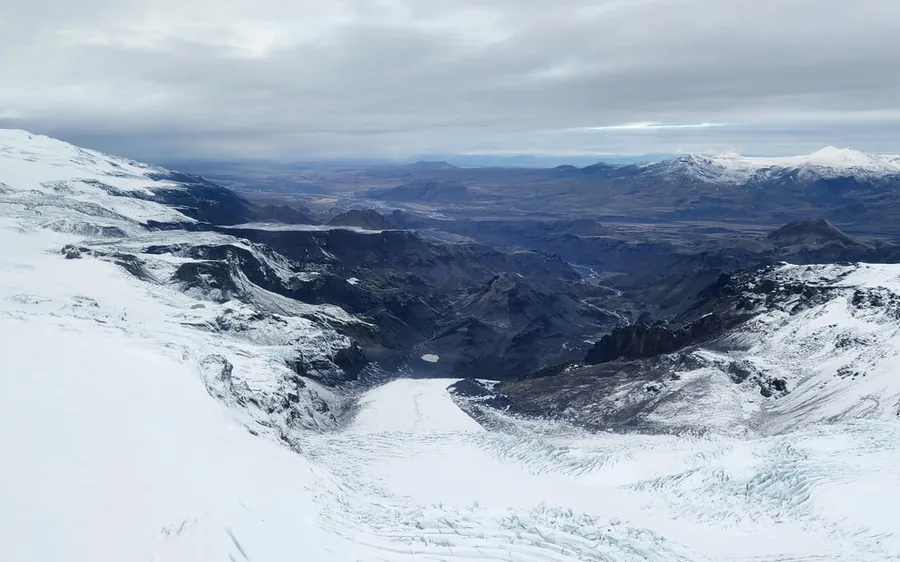
No. A recent lava field is sharp, unstable and can still be warm underneath, so no operator lands there. The tours that land put down on glacier ice, on the Hengill geothermal ground or on highland gravel instead.
Roughly twelve to fifteen minutes. The Reykjanes Peninsula begins almost at the edge of the city, which is why a thirty-five-minute tour can reach the craters, circle them and return.
They show different things. The hike is free, takes three to five hours plus the drive, and gives you texture and scale at one crater. The flight shows the whole system at once — which vent fed which flow. Trails also close at short notice for gas, weather or ground conditions.
Not necessarily. Aviation restrictions around an active fissure can keep aircraft further away or stand flights down altogether, so an eruption is not a guarantee of a closer look.
Go deeper
New Volcanic Area Tour
★ 4.8 · 569 reviews · Free cancellation 24 h